The Power of Regional Collaboration: IUCEA's AI "Training of Trainers" Programme
© IUCEA
The "Training of Trainers" (ToT) programme on AI, a collaboration between the Inter-University Council for East Africa (IUCEA) and IIOE, exemplifies a best practice in synergy between international institutions and regional organisations. The programme's success lies in a clear, actionable roadmap: IIOE provides high-quality resources and platform support, while the regional organisation leads localised co-creation, embedding capacity within the local network of university lecturers. This model offers valuable insights for systematically conducting capacity building in resource-limited regions.
Higher Education Integration in East Africa
Across the East African Community, demand for digital skills in the labour market is rising by an estimated 10%-12% each year, yet only 5%-10% of graduates leave university with the competencies required to meet it[1]. Some countries, such as Uganda and Kenya, are already taking active steps to integrate AI technologies into their education systems, while others, including Ethiopia and Tanzania, are strengthening their capacity-building efforts. To ensure that digital and AI advances benefit a wider community of teachers and learners, the region now needs more coordinated, cross-border initiatives in the use of digital tools and the development of locally relevant curricula.
As a pivotal organisation promoting the synergistic development of higher education in the region, the Inter-University Council for East Africa (IUCEA) possesses institutional advantages and policy foundations for regional AI capacity building. In June 2023, at its 14th Annual Meeting, adjusting higher education curricula to integrate AI education was explicitly listed as a priority[2]. Based on this consensus, IUCEA began upgrading teaching mechanisms by introducing new methods widely adopted by international higher education and industry. This strategic adjustment also laid the groundwork for its collaboration with IIOE, initiating a joint practice to advance AI education capacity building in East Africa.
Training of Trainers
IUCEA and IIOE jointly designed and implemented the AI "Training of Trainers" Programme. Focusing on scalability and local applicability, the programme innovatively adopted an "online initiation + offline co-creation" model, ensuring training content was deeply integrated into the specific context of East African universities. The first phase involved two online training sessions conducted via the IIOE platform in March and April 2025. Eighteen core faculty members were selected from IUCEA member universities. The training focused on AI fundamentals and teaching methodologies, while also familiarising trainers with the IIOE platform and its micro-credential course system, establishing a foundation for subsequent training activities[3].

© IUCEA
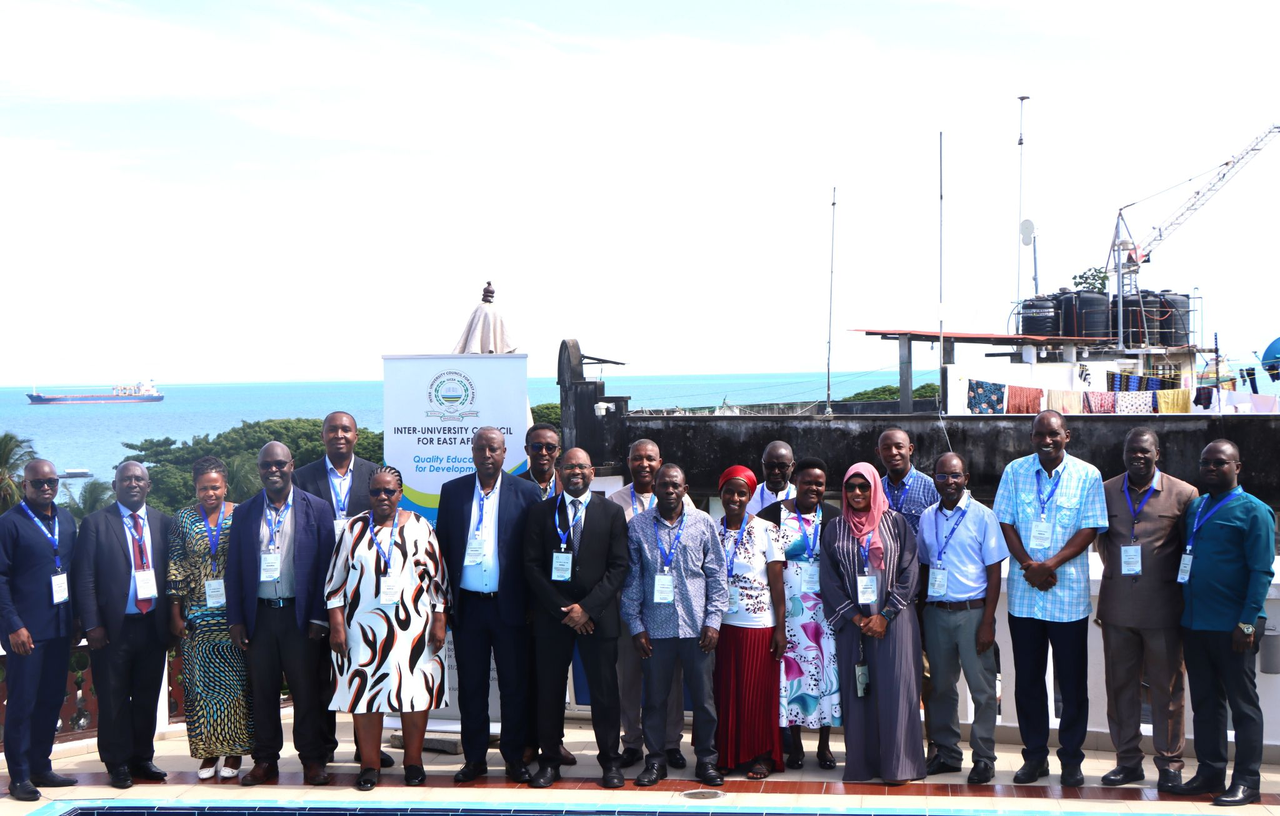
The second phase was an offline workshop held in Zanzibar, Tanzania, in May 2025. Lecturers from member universities were divided into groups to conduct in-depth discussions on AI teaching modules. During the workshop, participants identified the sequence of AI modules, assessed the applicability of tools, and provided customisation suggestions, resulting in the localised adaptation of the AI content. The emphasis on combining AI technology with actual East African teaching scenarios is crucial; while AI's potential is vast, it can be counterproductive if disconnected from existing curricula. Therefore, technological integration must serve effective learning and ensure pedagogical continuity is maintained. Consequently, these adaptations paid special attention to the quality, flexibility, adaptability, and equity of the courses, making them more relevant to East Africa's diverse cultures and resource conditions[3].
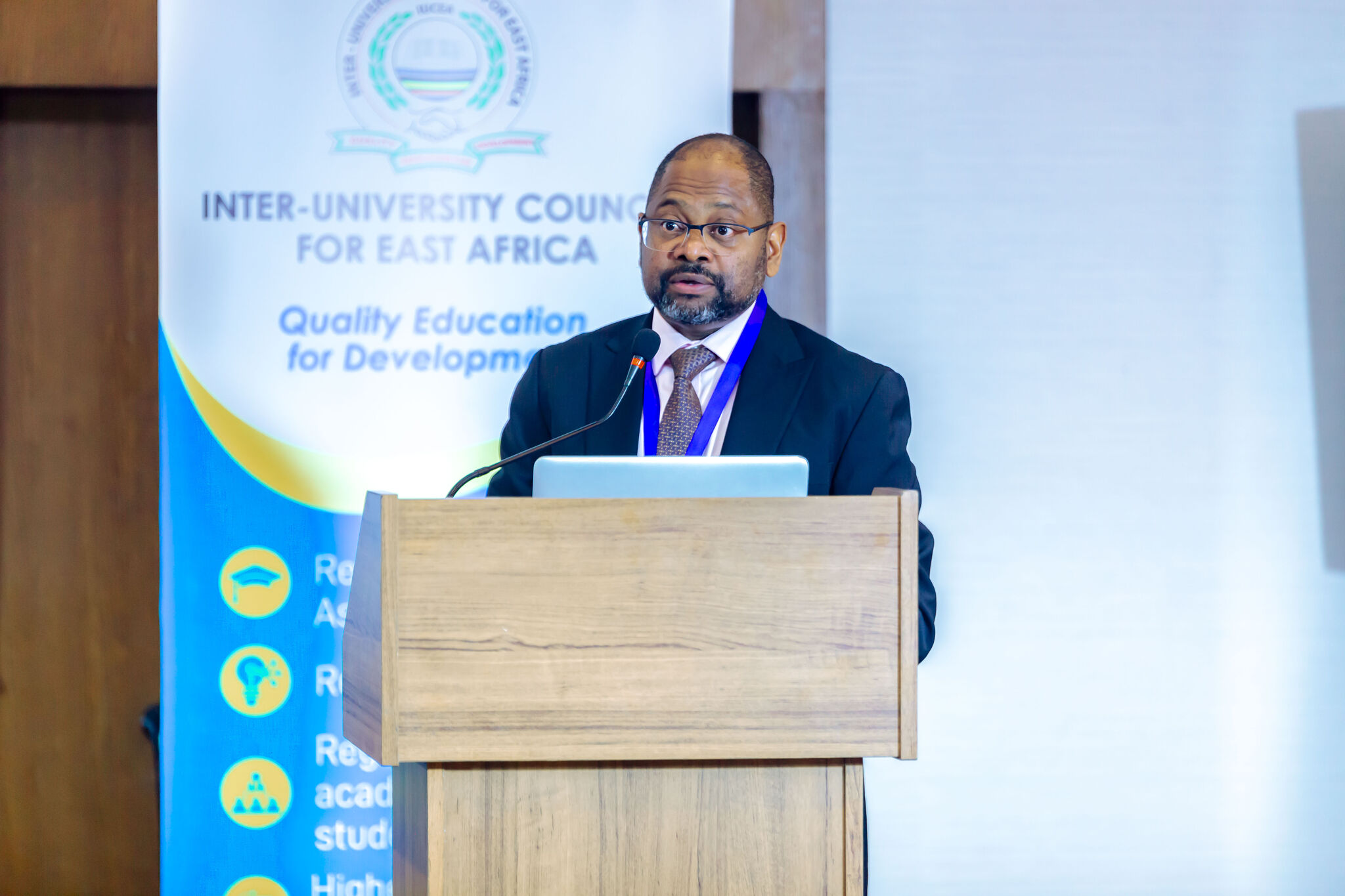
— Prof. Idris A. Rai, Deputy Executive Secretary of IUCEA
Following the successful localisation of seven AI literacy courses, the project entered its third phase, expanding online training to more faculty from IUCEA member universities to drive transformation and innovation in teaching philosophies and models across the region. On 30 July 2025, during the 16th IUCEA Annual Meeting, IUCEA and IIOE jointly launched the programme. Leveraging the IIOE platform and its rich resources, it provides teachers with systematic AI literacy and practical application training, supporting local exploration and practice for East Africa's educational digital transformation.
Now, the programme has attracted over 500 teachers to participate in learning. More than 300 of them have received micro-credentials, representing an issuance rate exceeding 60%. These outcomes reflect the strong demand for AI training among regional teachers and demonstrate the applicability of the course content within the East African higher education context.

© IUCEA
Javan Okello, a participant who received a micro-certification for Teaching with AI: Practical Tips and Prompts, shared on social media: "For East Africa, and Kenya in particular, the significance of this training lies in its alignment with IUCEA mandate to build institutional capacity and promote regional collaboration. Integrating AI into our classrooms can help educators manage large and diverse cohorts, contextualise teaching resources, and support students in acquiring skills for a digitally driven economy. As universities in our region strive to enhance quality, equity, and relevance, adopting these tools responsibly will be key to shaping the future of higher education.[4]"
Best Practices
The judging panel for the Pioneer Award highly commended the project's innovation in regional co-ordination mechanisms and its successful practice of effectively expanding training reach and impact through the "Training of Trainers" model. As the judges noted, regional synergy fully facilitates resource sharing among neighbouring countries, reflecting a balanced commitment to East African higher education integration, and achieves an organic combination and complementary advantage between IIOE resources and localised content.
Particularly commendable are IUCEA's innovative efforts in fostering multilateral collaboration. The AI ToT programme features a clear implementation plan: IIOE provides quality course resources and platform support, IUCEA undertakes regional co-ordination and standard-setting, and member universities are responsible for on-the-ground execution.
The programme's results demonstrate the unique and powerful driving role of IUCEA as a regional organisation in boosting platform usage rates, expanding course coverage, and amplifying project influence.

© IUCEA
Another innovation lies in the blended online-offline, content co-creation empowerment model. The programme employed a hybrid training approach where participating teachers jointly determined learning paths, assessed AI tool applicability, and proposed customisation suggestions. This process transformed the end-users (teachers) into co-developers of the product (courses), enhancing both practicality and acceptance. More importantly, it deeply empowered the teachers, enabling them to progress from "learning" to "knowing how to teach" and "knowing how to adapt."
The programme's focus on cultivating a local trainer network forms the bedrock of its sustainability. The core outcome is not merely the number of participants trained but the cultivation of a team of trainers composed of local educators. This ensures that AI education capacity can diffuse and deepen autonomously and continuously within the region.
Finally, the programme consciously transforms short-term outcomes into long-term institutional arrangements. For example, integrating the developed AI modules into the sustainable capacity-building system for university faculty members and integrating the co-operation model into IUCEA's quality assurance and faculty development strategies. This moves AI literacy enhancement beyond the limitations of a "one-off project," positioning it to become a regular, sustained component of the East African higher education system, providing solid institutional support for digital transformation.
AI literacy is blowing like a sea breeze into East African universities. The practice of IUCEA's AI ToT programme is not just a successful attempt but a vivid demonstration of continuous transformation. As follow-up trainings progress and the regional AI Centre of Excellence is established, more local teachers will master this key technology, truly converting the potential of artificial intelligence into a driving force for the advancement of higher education in East Africa. This path also represents a tangible route for Global South countries towards an inclusive digital future.
References:
[1] IUCEA,"Concept Note and Programme of Workshop to Launch the Training of Trainers for Academic Staff on the Use of Artificial Intelligence (AI) for Teaching, Learning and Research", Zanzibar, 13th to 16th May 2025.
[2] A Road Map to Quality : Handbook for Quality Assurance in Higher Education : Combined Volume 1 & 2; Guidlines for Internal and External Programme Assessment. 2015. [2nd edition]. [Kampala, Uganda] : Inter-University Council for East Africa.
[3] IUCEA,“IUCEA Strengthens Collaboration and Growth in EAC Higher Education”, Available: https://newvisionmedia. s3.amazonaws.com/cms/7dfc4150-c1a4-4775-979c-db2cf9cf25f6.pdf
[4] IUCEA, “IMPACT REPORT 2021-2025, Digital Skills for an Innovative East African Industry”, p.12, Mar. 28, 2025. Available: https://strapi.eacgermany.org/uploads/Digital_Skills_for_an_Innovative_East_African_Industry_Impact_Report_96b1a258a8.pdf
[5] Javan Okello, Linkedin Post , https://www.linkedin.com/posts/ai-consultant-kenya-javanokello_highereducationeastafrica- kenya-activity-7378360419561832449-qZV1?utm_source=share&utm_medium=member_ desktop&rcm=ACoAAF_YMKwBixReYodaIA8OZkh77E4nTc4e9GE(accessed Nov. 6, 2025).

- Bridging the Digital Divide Through GenAI Empowerment: The Mulungushi University Experience
- Weaving a National Digital Ecosystem: ITC and the Making of CCUN
- 2025 New Growth: The IIOE Ecosystem · 2025
- XJTLU: How to Build a Systematic "AI + Education" Ecosystem?
- The Power of Regional Collaboration: IUCEA's AI "Training of Trainers" Programme
- Consensus-Driven Digital Transformation: How the IIOE Nigeria National Centre is Pioneering an AI-Ready Academic Future
- Dialogue with CLOUD: Two Centres, One Pursuit of Excellence
- When Change Knocks: Inside the World of the Pioneer Award